News
(Advertisement)


Trump-Linked World Liberty Financial Files With OCC To Launch A National Trust Bank For USD1
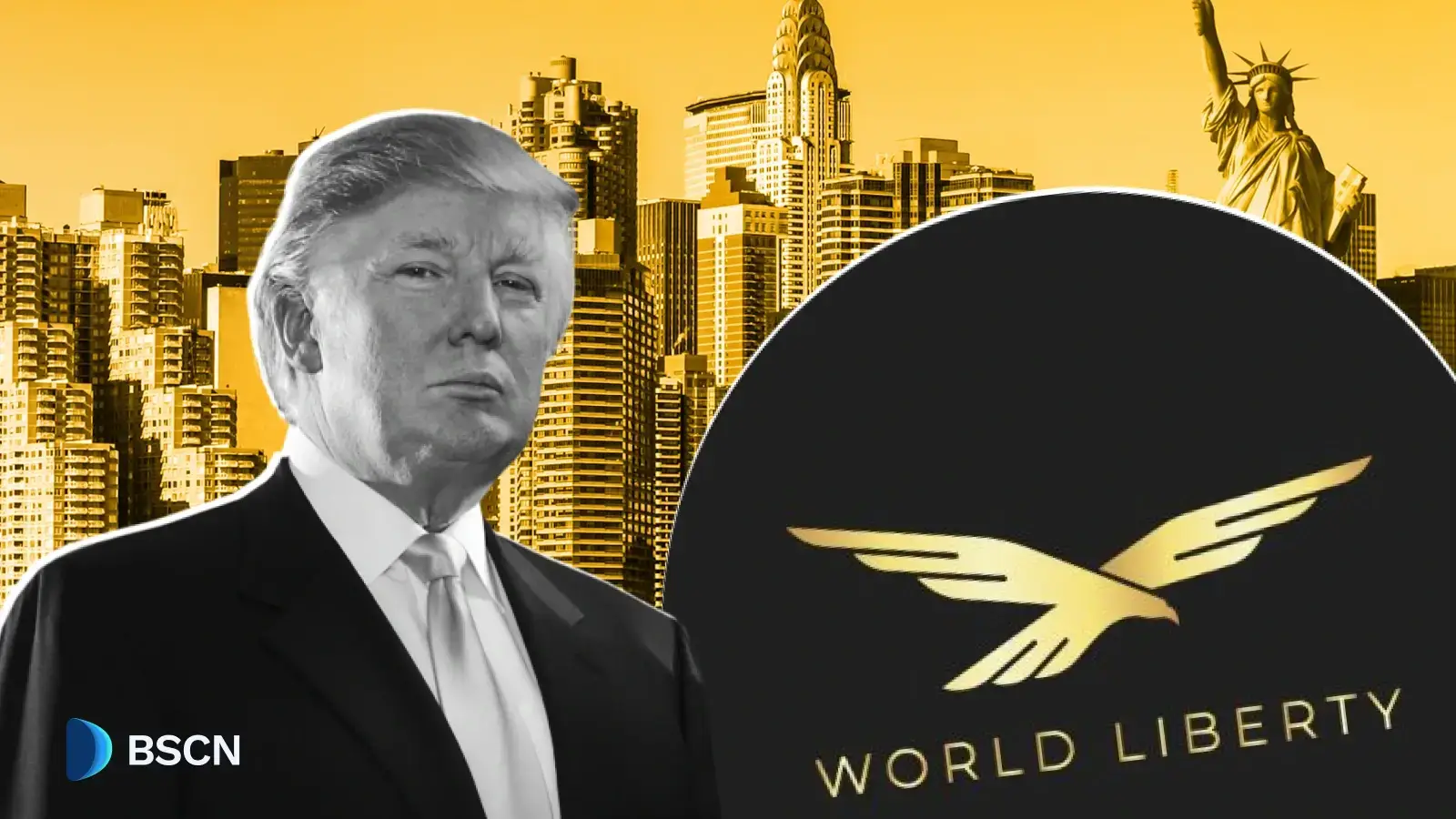
World Liberty Financial filed with the OCC to form a national trust bank for issuing and custodying its USD1 stablecoin.

Soumen Datta
January 8, 2026

(Advertisement)
Table of Contents
World Liberty Financial has filed an application with the Office of the Comptroller of the Currency to create a national trust bank focused on issuing and custodying its USD1 stablecoin. The proposed entity, World Liberty Trust Company, would bring stablecoin issuance, custody, and conversion under direct federal supervision if approved.
The filing marks a significant step by World Liberty Financial to formalize USD1’s operations inside the U.S. banking system. It also points to a wider move by stablecoin issuers toward national trust charters as institutional demand grows and regulatory requirements tighten.
What Did World Liberty Financial File With The OCC?
World Liberty Financial announced that its subsidiary, WLTC Holdings LLC, submitted a de novo application to the OCC to establish World Liberty Trust Company, National Association. A de novo application is used to form a brand-new national bank rather than converting an existing entity.
The proposed trust bank is purpose-built for stablecoin operations. If approved, World Liberty Trust Company would operate under federal banking supervision and be authorized to issue USD1, custody digital assets, and provide stablecoin conversion services.
In its press release, World Liberty Financial said institutions are already using USD1 for payments, settlement, and treasury management. The company said a national trust charter would allow these activities to operate under one regulated structure instead of across multiple entities.
Why Does A National Trust Bank Matter For USD1?
A national trust bank charter places a firm directly under the OCC, which has overseen trust activities in the United States for more than a century. For stablecoin issuers, this framework provides a clear legal structure for custody, reserves, and fiduciary responsibilities.
Under a national trust charter, customer assets must be segregated, reserve management must follow strict rules, and operations are subject to regular examination. This structure is designed to reduce counterparty risk and improve transparency for institutional users.
World Liberty Financial argues that this level of oversight is necessary as stablecoins move deeper into financial infrastructure. Many banks, asset managers, and corporations will not use stablecoins at scale without federal supervision and clear compliance standards.
How Big Is USD1 Today?
USD1 has grown rapidly since launching in March 2025. According to World Liberty Financial, the dollar-backed stablecoin has reached more than $3.37 billion in circulation within its first year.
The stablecoin is fully backed by:
- U.S. dollars held at regulated depository institutions
- Funds holding short-duration U.S. Treasury obligations
This reserve structure mirrors models used by other large stablecoin issuers and is designed to maintain price stability and liquidity during redemptions.
USD1 operates across ten blockchain networks, including Ethereum, Solana, BNB Smart Chain, TRON, Aptos, and AB Core. This multi-chain support allows near-instant cross-border transfers and programmable settlement for enterprise users.
What Services Will World Liberty Trust Company Offer?
World Liberty Trust Company plans to offer three core services under federal supervision. The company said these services will be available to institutional clients, including exchanges, market makers, and investment firms.
The planned services include:
- Stablecoin Issuance And Redemption
USD1 minting and redemption with no fees at launch. - On-Ramp And Off-Ramp Services
Conversion between U.S. dollars and USD1, also with no fees at launch. - Custody And Conversion
Secure custody for USD1 and other accepted stablecoins, with conversion at prevailing market rates.
By combining these services, World Liberty aims to offer a full operational stack for institutions that want stablecoin exposure without relying on multiple providers.
How Does Regulation Factor Into The Trust Bank Plan?
World Liberty Trust Company said it will operate in compliance with the GENIUS Act, the stablecoin framework signed into U.S. law last July. The law established federal standards for stablecoin issuers, including reserve requirements, disclosure rules, and oversight responsibilities.
The trust bank would also follow:
- Anti-money laundering requirements
- Sanctions screening obligations
- Cybersecurity standards used in regulated financial institutions
Mack McCain, general counsel of World Liberty Financial, is listed as the proposed trust officer. He would oversee fiduciary operations and ensure compliance with OCC supervision.
“The OCC has supervised trust activities for over a century,” said Mack McCain, the proposed trust officer of World Liberty Trust Company. “WLTC will operate under that same framework, with segregated customer assets, independent reserve management, and regular examination. That gives banks, asset managers, and corporations the regulatory clarity they need to further expand their use of USD1.”
How Does This Compare To Other Trust Bank Applications?
World Liberty Financial is not alone in seeking a national trust charter. In December, the OCC granted conditional approvals to Circle, Ripple, BitGo, Fidelity Digital Assets, and Paxos for similar trust bank applications.
Other firms, including Coinbase and Crypto.com, have also applied.
Worth noting, stablecoin issuers and crypto infrastructure firms are moving away from loosely regulated structures toward formal banking oversight. This shift accelerated after regulators removed barriers that once limited banks from engaging in digital asset custody and settlement.
Why Are Institutions Using Stablecoins Like USD1?
Stablecoins are increasingly used as settlement assets rather than speculative instruments. Institutions use them for:
- Cross-border payments that settle faster than wire transfers
- Treasury operations that require 24-hour liquidity
- Tokenized settlement in blockchain-based systems
USD1 has already been adopted for these use cases, according to World Liberty Financial. BitGo CEO Mike Belshe said BitGo supported USD1’s growth and plans to remain a strategic partner as the trust bank becomes operational.
How Does World Liberty’s Ownership Draw Attention?
World Liberty Financial launched in October 2024 and listed President Donald Trump and his sons, Donald Jr., Eric, and Baron, as co-founders. This connection has drawn scrutiny from both political observers and market participants.
Despite the attention, USD1’s growth has followed patterns seen in other large stablecoins, driven by exchange listings, institutional partnerships, and cross-chain deployment rather than retail speculation.
What Is The Role Of WLFI And Treasury Proposals?
World Liberty Financial also operates a governance token, WLFI. In December, the project proposed using less than 5% of unlocked WLFI treasury tokens to support USD1 growth.
The proposal outlined clear limits:
- Treasury usage capped below 5%
- Public disclosure of all deployments
- Any future use requiring additional governance votes
The goal is to support USD1 integrations across centralized and decentralized platforms while maintaining oversight by token holders.
How Does This Tie Into Real-World Asset Tokenization?
World Liberty Financial has signaled plans to expand beyond stablecoins. The company confirmed it will launch real-world asset products in January.
Real-world asset tokenization refers to issuing digital tokens that represent traditional assets like equities or commodities. These tokens can be transferred and settled on blockchains while remaining tied to regulated assets.
USD1 is positioned as the settlement layer for these products. A regulated trust bank structure could support this model by handling custody, reserves, and conversions under one entity.
What Happens Next In The OCC Review Process?
The OCC review process can take several months. During this time, regulators assess governance, capital adequacy, compliance systems, and operational readiness.
If approved, World Liberty Trust Company would join a small but growing group of federally supervised crypto-focused trust banks. If denied, World Liberty could still operate USD1 through existing partners, but without the unified structure it is seeking.
Conclusion
World Liberty Financial’s OCC filing aims to establish a national trust bank dedicated to issuing, custodying, and converting the USD1 stablecoin. The proposed structure would place USD1 under direct federal supervision, with segregated assets, regulated reserves, and standardized compliance.
With over $3.3 billion in circulation and active institutional use, USD1 has reached a scale where formal banking oversight aligns with its current operations. The application reflects how stablecoins are moving from peripheral tools into regulated financial infrastructure.
Resources
World Liberty Financial on X: Announcements (January, 2026)
Press release by World Liberty Financial: World Liberty Financial Announces that WLTC Holdings LLC has Submitted an Application for a National Trust Bank Charter to Issue and Custody USD1 Stablecoins
Report by The Block: Trump-backed World Liberty Financial seeks US bank charter to bring USD1 stablecoin fully onshore
Proposal by World LibertyFi: Utilize Unlocked $WLFI Treasury Holdings to Support the Growth of USD1
Report by Reuters: WLF to launch real-world asset products in January, co-founder says



Frequently Asked Questions
What Is World Liberty Trust Company?
It is a proposed national trust bank that would issue, custody, and convert the USD1 stablecoin under OCC supervision.
What Is USD1 Backed By?
USD1 is backed by U.S. dollars held at regulated banks and funds holding short-duration U.S. Treasury obligations.
Why Did World Liberty File With The OCC?
The company wants to bring stablecoin issuance, custody, and conversion under one federally regulated entity to meet institutional requirements.
Disclaimer
Disclaimer: The views expressed in this article do not necessarily represent the views of BSCN. The information provided in this article is for educational and entertainment purposes only and should not be construed as investment advice, or advice of any kind. BSCN assumes no responsibility for any investment decisions made based on the information provided in this article. If you believe that the article should be amended, please reach out to the BSCN team by emailing [email protected].
Author
 Soumen Datta
Soumen has been a crypto researcher since 2020 and holds a master’s in Physics. His writing and research has been published by publications such as CryptoSlate and DailyCoin, as well as BSCN. His areas of focus include Bitcoin, DeFi, and high-potential altcoins like Ethereum, Solana, XRP, and Chainlink. He combines analytical depth with journalistic clarity to deliver insights for both newcomers and seasoned crypto readers.
(Advertisement)
Latest News
February 24, 2026
Buterin's 10,000 $ETH Selling Spree: Why Now?
February 24, 2026

A Closer Look at Backpack's $BP Token
February 24, 2026

Ethereum Unveils Massive Staking Plans: 70,000 $ETH to Hit The Network
February 24, 2026

Three Major Solana Platforms Announce Full Shutdown: Report
February 24, 2026
Analysing Paradex: Zero-Fee Perps with Privacy
February 24, 2026
What is the Clarity Act?
February 24, 2026
Pi Network Celebrates One Year Post-Open Network: What Has Changed Since Launch?
February 24, 2026
Is Jane Street Behind the 2022 Crypto Collapse?
(Advertisement)

Crypto Project & Token Reviews
Project & Token Reviews
Comprehensive reviews of crypto's most interesting projects and assets
Learn about the hottest projects & tokens