News
(Advertisement)


Telcoin's Banking Operations Begin as eUSD Launches on Ethereum & Polygon
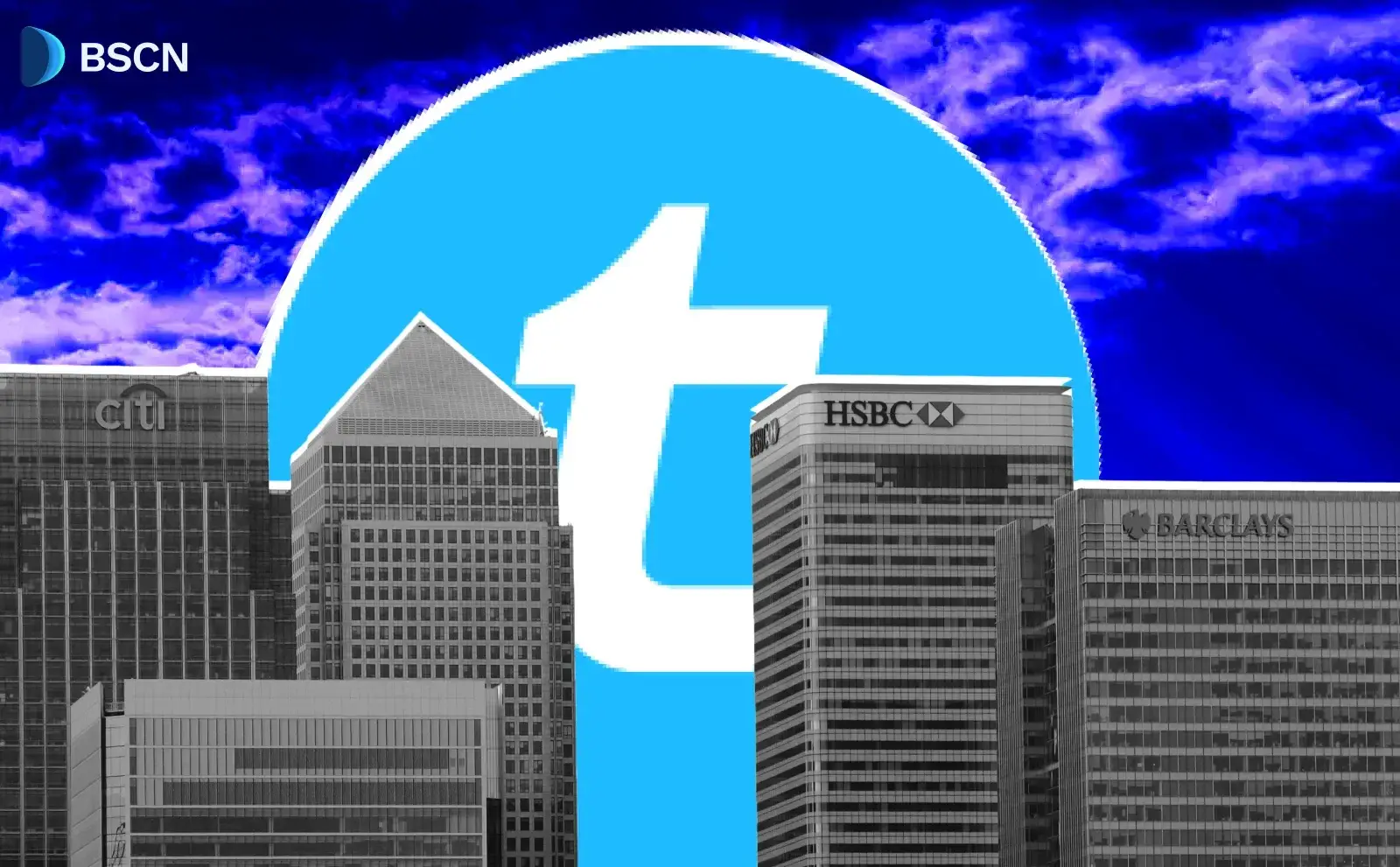
Telcoin begins regulated banking operations by launching its eUSD stablecoin on Ethereum and Polygon following U.S. charter approval.

UC Hope
December 29, 2025

(Advertisement)
Table of Contents
Telcoin has formally begun banking operations with the launch of its eUSD stablecoin on Ethereum and Polygon, marking the first time a U.S.-chartered bank has issued a dollar-backed stablecoin directly onto public blockchains.
Announced on December 26, 2025, the rollout follows regulatory approval for Telcoin Digital Asset Bank in November and includes an initial mint of $10 million in eUSD. The move places Telcoin at the intersection of regulated banking and blockchain-based payments, with implications for stablecoins, remittances, and digital asset oversight in the United States.
Telcoin and the Launch of eUSD
Telcoin was founded in 2017 with the aim of using blockchain infrastructure and telecommunications networks to deliver low-cost financial services to mobile users. Its platform focuses on payments and cross-border remittances, distributed primarily through partnerships with mobile network operators (MNOs). According to the company, Telcoin works with more than 200 MNOs globally and supports over 2 million wallet users, with much of its activity concentrated on Polygon due to lower transaction costs.
The launch of eUSD represents a structural expansion of Telcoin’s role in financial services. eUSD is a U.S. dollar–pegged stablecoin backed 1:1 by cash reserves held at Telcoin Digital Asset Bank. Unlike many existing stablecoins, eUSD is issued directly by a regulated depository institution rather than a non-bank fintech or offshore entity.
The initial issuance of $10 million is modest by stablecoin market standards, but its importance lies less in scale than in structure. The issuance formally activates the bank’s operating authority and demonstrates a regulatory model that blends blockchain settlement with U.S. banking supervision.
What Makes eUSD Structurally Different?
Most widely used stablecoins today, including Circle’s USDC and Tether’s USDT, are issued by private companies that hold reserves outside the traditional banking system. While these issuers publish attestations and, in some cases, audits, they are not themselves chartered banks.
eUSD differs in three key ways:
First, it is issued by a U.S.-chartered bank, subject to ongoing supervision by state banking regulators. This includes capital requirements, reserve rules, and compliance with anti-money laundering and consumer protection laws.
Second, reserves backing eUSD are held directly on the bank’s balance sheet in cash or cash-equivalent assets, rather than through a network of custodians. This structure reduces reliance on third parties and narrows counterparty risk.
Third, eUSD operates within a legal framework designed specifically for payment stablecoins, rather than relying on interpretations of existing money transmission or trust laws.
While eUSD is not explicitly FDIC-insured at launch, its regulatory treatment more closely resembles that of a narrow bank deposit than that of a typical crypto-issued stablecoin.
Deployment on Ethereum and Polygon
eUSD is live on both Ethereum and Polygon. Ethereum provides broad compatibility with existing wallets, exchanges, and decentralized finance (DeFi) applications. Polygon offers significantly lower transaction fees and faster settlement, making it more suitable for retail payments and remittances.
This dual-chain deployment reflects Telcoin’s stated focus on practical payment flows rather than speculative trading. The company has indicated that additional chains may be supported over time, particularly where they offer advantages for cross-border transfers or mobile-first applications.
Nebraska’s Regulatory Framework
Telcoin Digital Asset Bank is the first institution chartered under the Nebraska Financial Innovation Act (NFIA) of 2021. The law created a new category of regulated entity: a digital asset depository institution. These banks are permitted to custody digital assets, issue stablecoins, and process payments, but they are restricted from engaging in traditional lending.
Under the NFIA, institutions must maintain full reserves, meet stringent capital standards, and comply with state and federal anti-money laundering requirements. The framework was designed to provide legal clarity for digital asset businesses while limiting systemic risk.
Telcoin received provisional approval for its charter in February 2025, raised approximately $25 million to meet capitalization requirements, and obtained final authorization in November following Jim Pillen's sign-off.
Nebraska’s approach mirrors, but is distinct from, Wyoming’s SPDI regime. While Wyoming has emphasized digital asset custody, Nebraska’s statute places greater emphasis on payment stablecoins and on-chain settlement.
Alignment With Federal Stablecoin Law
The launch of eUSD also aligns with the federal GENIUS Act, passed in mid-2025, which establishes national standards for payment stablecoins in the United States. The law requires issuers to maintain 100 percent reserves in high-quality liquid assets, prohibits stablecoin issuers from paying yield directly to holders, and mandates regular disclosures and audits.
By operating within both the NFIA and the GENIUS Act, Telcoin avoids many of the regulatory uncertainties that have affected earlier stablecoin projects. This alignment may also ease future integration with existing payment infrastructure, including potential access to Federal Reserve settlement systems.
The federal framework was designed in part to address failures in the digital asset sector, including collapses linked to inadequate reserves or opaque governance. eUSD’s structure reflects those lessons by prioritizing transparency and legal enforceability over rapid expansion.
What Does This Mean for Payments and Remittances?
Telcoin’s core business has long focused on international remittances, a market estimated at roughly $800 billion annually. Traditional remittance services often charge fees of 6-7%, particularly for transfers to developing markets.
By issuing eUSD directly through a regulated bank and distributing it via mobile wallets, Telcoin aims to reduce settlement times and transaction costs. Transfers using eUSD on Polygon can settle in seconds, with network fees measured in fractions of a cent under normal conditions.
The company’s existing relationships with mobile network operators are central to this strategy. In regions where access to traditional banking is limited but mobile penetration is high, stablecoin-based transfers may offer a more efficient alternative to cash-based systems.
Importantly, while the bank itself cannot pay interest on eUSD balances under federal law, users may still deploy eUSD in third-party DeFi protocols at their own discretion. This separation preserves regulatory compliance while allowing optional on-chain financial activity.
Broader Industry Significance
The issuance of eUSD by a U.S.-chartered bank sets a precedent that may influence how other states and institutions approach digital asset regulation. It demonstrates that stablecoins can be integrated into the banking system without relying on offshore structures or regulatory exemptions.
For policymakers, the launch provides a live test case for the GENIUS Act and state-level digital asset banking statutes. For financial institutions, it offers a reference model for combining on-chain settlement with regulated custody and payments.
The development also positions the United States more competitively against other jurisdictions that have moved quickly to regulate stablecoins, including the European Union under its Markets in Crypto-Assets framework.
Conclusion
Telcoin’s launch of eUSD on Ethereum and Polygon marks the operational start of a new category of U.S.-regulated digital banking. By issuing a fully reserved stablecoin directly from a chartered bank, Telcoin has established a structure that prioritizes legal clarity, reserve transparency, and integration with existing payment systems.
While the initial issuance is limited in size, the framework behind it carries broader implications for stablecoins, remittances, and the role of banks in blockchain-based finance. The success of eUSD will ultimately depend on execution, adoption, and regulatory continuity, but its launch represents a concrete step toward aligning digital assets with established financial oversight.
Sources:
- BullDog Law: Nebraska’s Telcoin Approval
- Business Wire: Telcoin Begins Digital Asset Banking Operations
- Website: Digital Asset Bank


Frequently Asked Questions
What is eUSD?
eUSD is a U.S. dollar–pegged stablecoin issued by Telcoin Digital Asset Bank and backed 1:1 by cash reserves held at the bank.
Why is Telcoin’s eUSD different from other stablecoins?
Unlike most stablecoins, eUSD is issued directly by a U.S.-chartered bank and operates under state and federal banking regulations.
Which blockchains support eUSD at launch?
eUSD is live on Ethereum and Polygon, with additional networks under consideration.
Disclaimer
Disclaimer: The views expressed in this article do not necessarily represent the views of BSCN. The information provided in this article is for educational and entertainment purposes only and should not be construed as investment advice, or advice of any kind. BSCN assumes no responsibility for any investment decisions made based on the information provided in this article. If you believe that the article should be amended, please reach out to the BSCN team by emailing [email protected].
Author
 UC Hope
UC holds a bachelor’s degree in Physics and has been a crypto researcher since 2020. UC was a professional writer before entering the cryptocurrency industry, but was drawn to blockchain technology by its high potential. UC has written for the likes of Cryptopolitan, as well as BSCN. He has a wide area of expertise, covering centralized and decentralized finance, as well as altcoins.
(Advertisement)
Latest News
February 24, 2026

Buterin's 10,000 $ETH Selling Spree: Why Now?
February 24, 2026

A Closer Look at Backpack's $BP Token
February 24, 2026

Ethereum Unveils Massive Staking Plans: 70,000 $ETH to Hit The Network
February 24, 2026

Three Major Solana Platforms Announce Full Shutdown: Report
February 24, 2026
Analysing Paradex: Zero-Fee Perps with Privacy
February 24, 2026

What is the Clarity Act?
February 24, 2026

Pi Network Celebrates One Year Post-Open Network: What Has Changed Since Launch?
February 24, 2026

Is Jane Street Behind the 2022 Crypto Collapse?
(Advertisement)

Crypto Project & Token Reviews
Project & Token Reviews
Comprehensive reviews of crypto's most interesting projects and assets
Learn about the hottest projects & tokens