News
(Advertisement)


Google Chrome Got a Critical Security Patch, But Your Crypto Wallet Might Still Be at Risk
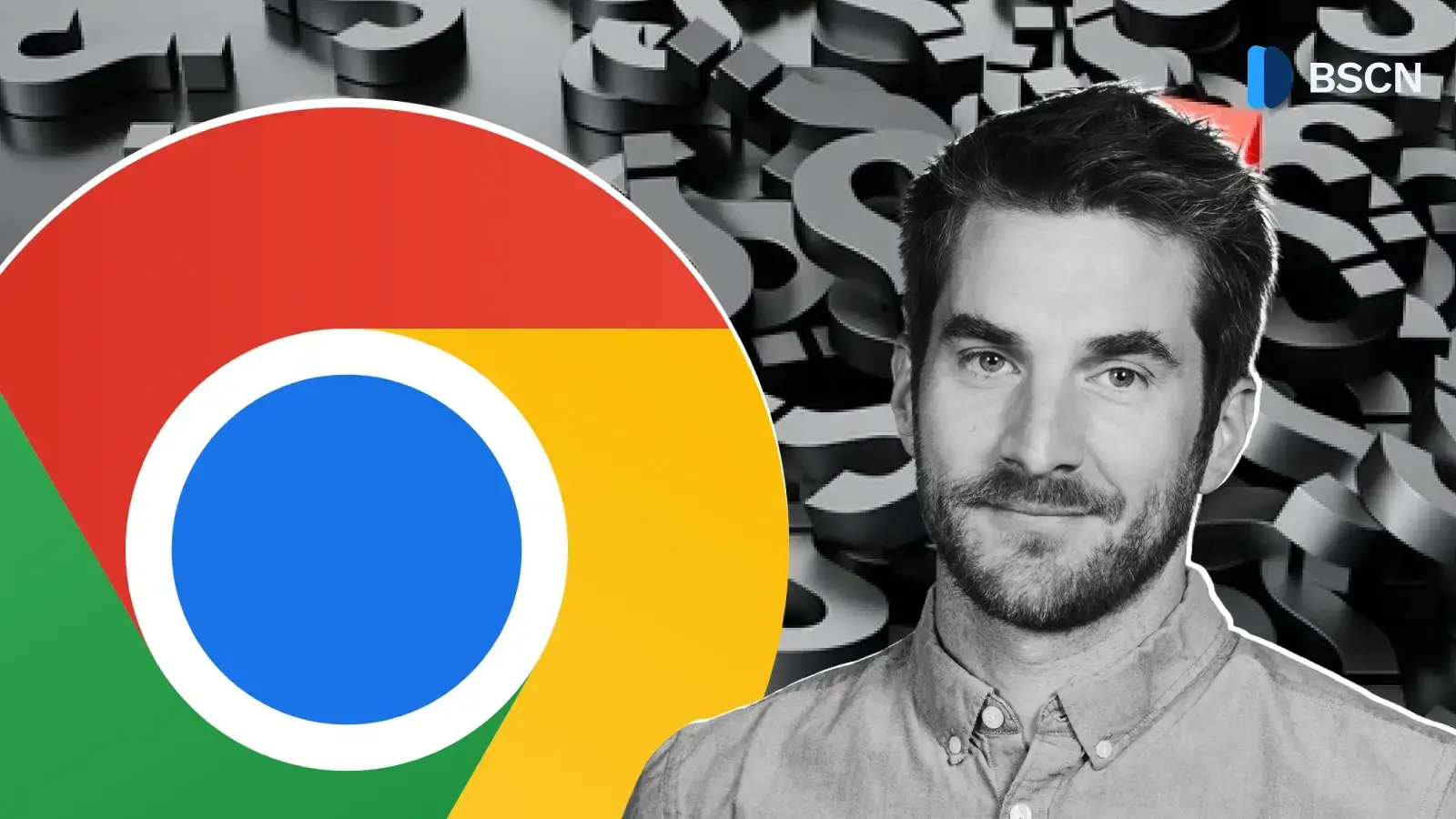
Ledger CTO Charles Guillemet warns crypto users after Google patches 26 Chrome vulnerabilities. Here's what browser wallet users need to know and do now.

Soumen Datta
March 23, 2026

(Advertisement)
Table of Contents
Ledger CTO Charles Guillemet is urging crypto users to update Google Chrome immediately after Google released a security patch addressing 26 vulnerabilities, including 4 rated critical and 22 rated high severity.
This fix addresses 4 Critical and 22 High vulnerabilities. A good reminder that you can't trust your browser/computer for your valuable secrets... https://t.co/9MhQ9jgNCj
— Charles Guillemet (@P3b7_) March 21, 2026
The flaws include memory management errors that could allow an unauthenticated attacker to execute malicious code remotely through a specially crafted webpage.
What Did the Ledger CTO Actually Say?
Guillemet shared the alert publicly, adding a pointed observation that goes beyond the Chrome patch itself. "A good reminder that you can't trust your browser or computer for your valuable secrets," he said. That comment is directed squarely at crypto users who rely on browser-based wallets and extensions for daily activity.
The vulnerabilities flagged in this patch cycle fall into three classic categories of memory management errors:
- Use-after-free conditions, where a program continues to use memory after it has been released
- Heap buffer overflows, where data is written beyond the allocated memory space
- Out-of-bounds access, where code reads or writes memory outside its intended range
Each of these can be exploited to write payloads into system memory and achieve remote code execution, often without the user doing anything beyond visiting a malicious webpage.
Can a Chrome Exploit Actually Drain Your Crypto Wallet?
Your crypto is stored on-chain, not inside the browser itself. However, a working browser exploit does not need to reach the blockchain directly to cause real damage. It targets the wallet interface layer, and that is where the risk becomes concrete.
Browser wallets like MetaMask, Rabby, and Phantom operate primarily as Chrome extensions. If an exploit executes inside the browser, an attacker can interact with the wallet's user interface in several ways.
How Attackers Use Browser Exploits Against Wallet Users
Once inside the browser environment, common attack methods include:
- Fake wallet prompts: Overlays that mimic MetaMask or other wallet confirmation screens ask users to "reconnect" or "claim" an asset. Clicking through signs a transaction approval that moves funds to an attacker's wallet.
- Spend approvals: Rather than stealing funds immediately, the exploit requests a token approval signature. This gives an attacker's smart contract permission to transfer tokens at any point in the future.
- Session hijacking: If the exploit captures session cookies from an open exchange tab, it can operate as the user until the session ends, moving assets without further interaction.
- Clipboard and keystroke abuse: Some exploits monitor clipboard content to intercept copied wallet addresses or passwords.
This is not a theoretical scenario. In December 2025, Trust Wallet confirmed a security incident tied to its Chrome extension version 2.68, in which malicious code iterated through stored wallets, triggered mnemonic phrase requests, decrypted them using the user's own password, and sent them to an attacker-controlled server. Approximately $7 million was drained, including around $3 million in Bitcoin and more than $3 million in Ethereum.
Blockchain investigator ZachXBT confirmed hundreds of victims, with stolen funds routed through ChangeNOW, FixedFloat, and KuCoin for laundering.
This Is Not the First Time Chrome Faced Security Issues
In September 2025, Google patched a Chrome zero-day tracked as CVE-2025-10585, a type-confusion bug in V8, Chrome's JavaScript engine. A type-confusion vulnerability means the browser can mishandle objects in memory, opening a path to code execution. Google confirmed at the time that the flaw was being actively exploited before the patch shipped.
That patch cycle followed the same pattern as the current one: a memory-level flaw, active exploitation in the wild, and a fast-tracked fix to the Stable channel.
The iOS "DarkSword" Exploit Adds a Second Front
Separately, Binance issued a security alert for iOS users around the same period. Apple identified a critical exploit chain called "DarkSword," affecting iOS versions 18.4 through 18.7.
Unlike browser-based attacks, DarkSword is a system-level vulnerability that can trigger automatically without any user interaction when visiting a compromised website. It can extract sensitive data including crypto wallet information and erase its own traces after execution, making it difficult to detect after the fact.
What Crypto Users Should Do Right Now
Browser vulnerabilities are not new, but the consequences for crypto users are more direct than for the average internet user. A compromised browser session can lead to signed transactions, stolen approvals, and drained wallets, even when the underlying assets sit safely on-chain.
The immediate steps are straightforward:
- Update Google Chrome to the latest version in your browser settings
- Check that all wallet extensions, including MetaMask, Rabby, and Phantom, are running their most recent releases
- Avoid interacting with unexpected wallet prompts, reconnect requests, or asset claim notifications
- iOS users should update to the latest system version to address the DarkSword exploit chain
Guillemet's core point holds regardless of which vulnerability is making headlines this week. A browser is a hostile environment for financial secrets. For users managing meaningful crypto holdings through browser extensions alone, that risk calculation is worth revisiting.
Resources
Ledger CTO Charles Guillemet on X: Post on March 21
Trust Wallet on X: Post on Dec, 26
Report by Cyber Press: Google Chrome Update Fixes 26 Security Flaws, Including RCE Vulnerabilities
Report by The Hacker News: Google Patches Chrome Zero-Day CVE-2025-10585 as Active V8 Exploit Threatens Millions
Read Next...




Frequently Asked Questions
Does updating Chrome protect my crypto wallet extensions?
Updating Chrome patches the underlying browser vulnerabilities, which removes the attack surface those exploits rely on. However, extensions themselves can carry separate risks, as the Trust Wallet incident in December 2025 demonstrated. Keeping both Chrome and individual extensions updated is necessary.
What is a use-after-free vulnerability in a browser?
It is a memory error that occurs when a program continues to reference memory it has already released. Attackers can exploit this to write controlled data into that freed memory space and trigger code execution, often without the user knowingly doing anything wrong.
Should hardware wallet users worry about these Chrome vulnerabilities?
Hardware wallets like Ledger store private keys offline and require physical confirmation for transactions. A browser exploit cannot extract keys from a hardware device directly. However, fake wallet prompts and malicious transaction requests can still appear in the browser interface, which is why Guillemet's warning applies even to hardware wallet users who connect through a browser.
Disclaimer
Disclaimer: The views expressed in this article do not necessarily represent the views of BSCN. The information provided in this article is for educational and entertainment purposes only and should not be construed as investment advice, or advice of any kind. BSCN assumes no responsibility for any investment decisions made based on the information provided in this article. If you believe that the article should be amended, please reach out to the BSCN team by emailing [email protected].
Author
 Soumen Datta
Soumen has been a crypto researcher since 2020 and holds a master’s in Physics. His writing and research has been published by publications such as CryptoSlate and DailyCoin, as well as BSCN. His areas of focus include Bitcoin, DeFi, and high-potential altcoins like Ethereum, Solana, XRP, and Chainlink. He combines analytical depth with journalistic clarity to deliver insights for both newcomers and seasoned crypto readers.
(Advertisement)
Latest News
3h : 23m ago

CLARITY Act Got Its Biggest Break Yet — Is Crypto Law Finally Happening?
5h : 53m ago
Google Chrome Got a Critical Security Patch, But Your Crypto Wallet Might Still Be at Risk
9h : 8m ago
Is Missouri About to Make XRP an Official State Reserve Asset?
March 20, 2026

Can ASTER Dominate The Perps Sector?
March 20, 2026

Elon Musk is Tweeting About DOGE Again: What's Next?
March 20, 2026

Animoca Brands Invests in Ava Labs to Expand Avalanche in Asia and Middle East
March 20, 2026
Zebec Takes Streaming Payroll to Stellar in First Move Outside Solana
March 20, 2026

SEC Chair Says Crypto Markets and the American People Deserve Clarity
(Advertisement)

Crypto Project & Token Reviews
Project & Token Reviews
Comprehensive reviews of crypto's most interesting projects and assets
Learn about the hottest projects & tokens

Latest Crypto News
Get up to date with the latest crypto news stories and events
