News
(Advertisement)


Cardano Founder Slams Crypto CLARITY Act: "Horrific Trash Bill"
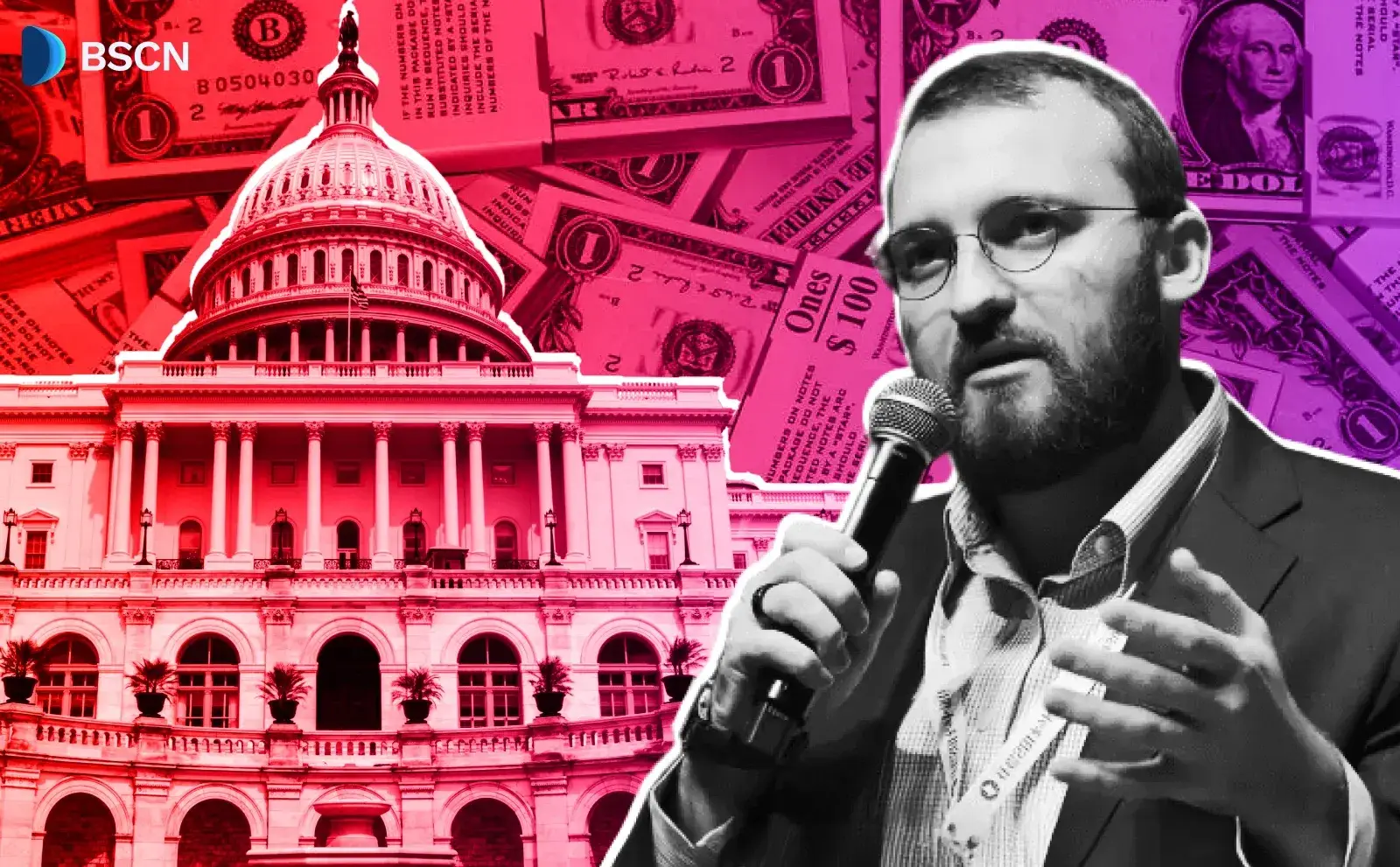
Charles Hoskinson calls the CLARITY Act a "horrific trash bill" in a live broadcast, warning it makes all new crypto projects securities by default and hands the SEC unlimited power.

Crypto Rich
March 4, 2026

(Advertisement)
Table of Contents
The Digital Asset Market Clarity Act hands the SEC unlimited power over every new American crypto project and does nothing for DeFi. That's the argument Charles Hoskinson made in a March 3, 2026, live broadcast titled "H.R. 3633 and the Idiocy of the Masses", and he didn't hold back. The Cardano founder and IOHK CEO tore into the bill line by line, calling it a "horrific trash bill" that would lock new projects into securities status while established names like Cardano and Ethereum walk through a grandfathering loophole.
The broadcast, posted on X and YouTube, racked up tens of thousands of views within hours. Viral clips captured Hoskinson's bluntest summary: "I guess we just have to pass a horrific trash bill that makes everything a security by default. This is NOT a good bill. If it starts as a security, what stops them from keeping it as a security forever?"

What Is the CLARITY Act?
H.R. 3633, the Digital Asset Market Clarity Act of 2025, passed the House in July 2025 with strong bipartisan support, 294 votes to 134. It remains stalled in Senate negotiations after missing a White House March 1 deadline, with the primary holdup still yield-bearing stablecoins. Circle and Coinbase want them.
The bill's stated goal is to end the regulatory grey zone that has defined U.S. crypto for years. It splits oversight between the CFTC, which would cover digital commodities and decentralized assets, and the SEC, which retains jurisdiction over initial fundraising and securities. Tokens launched by centralized teams start as "investment contract assets," classified as securities, and must later apply to graduate to commodity status once a blockchain is deemed sufficiently decentralized.
Why Hoskinson Calls It a Trap
Hoskinson spent the full broadcast walking through the bill section by section. He was in the room for three years of negotiations, working with Senator Lummis's staff since the FIT21 bill in 2022. He watched 137 amendments strip out developer protections. What's left, in his view, is a bureaucratic weapon the SEC can use against any project it doesn't like.
His core objection: everything starts as a security by default. To escape that classification, a project must apply to the SEC and convince the agency it no longer qualifies. The SEC decides. No independent review. No objective threshold. The agency acts as judge, jury, and executioner.
From there, Hoskinson laid out four specific attack vectors an adversarial SEC could deploy through rulemaking:
- The shot clock trap. The bill gives the SEC 60 days to respond to a graduation application, but doesn't mandate when that clock starts. The SEC can define "completeness" however it wants, issue deficiency letters on day 59, and restart the clock indefinitely. That's the same playbook New York State used with the BitLicense.
- The open-source criminalization trap. The bill protects formal DAOs but doesn't define the line between protected decentralization and prohibited common control. The SEC could define coordination to include sharing a GitHub repository, coordinating on upgrade timelines, or participating in the same public Discord, making virtually any collaborative development a liability.
- The impossible proof-of-decentralization trap. To graduate, a project must prove that no single beneficial owner controls more than 20% of the network stake. That requires KYC documentation on anonymous wallets, or certification from SEC-registered blockchain forensic auditors, a category the SEC hasn't opened for registration yet. Compliance is structurally impossible.
- The value attribution trap. The bill says a token qualifies as a commodity when its value is derived from actual blockchain use, not speculation. The SEC gets to define how to measure that. Hoskinson's read: every cryptocurrency, including Bitcoin, would fail a serious application of that standard.
"This is me just off the top of my head for a few minutes looking at the bill," Hoskinson said. "Do you understand that an adversarial SEC, this is a wet dream?"
Industry Fracture: Hoskinson vs. Garlinghouse
The broadcast was partly a response to Ripple CEO Brad Garlinghouse, who has said publicly that "a bad bill is better than no bill." Garlinghouse gives the CLARITY Act a 90% chance of passing by April and frames the choice as clarity versus continued chaos. Ripple CTO David Schwartz echoed the sentiment, calling a suboptimal framework preferable to the regulatory void.
Hoskinson dismisses that logic by pointing to who pays the price. Projects that already had spot ETFs approved before January 2026 get grandfathered in, including XRP, Solana, Ethereum, and Cardano. They clear the gate regardless of how the rulemaking goes. The cost of a bad bill falls entirely on every project that comes after it.
"What they'll do in practice is grandfather in the top 10 projects that have been around for a long time," Hoskinson said. "Cardano, this doesn't impact it. But every new blockchain project moving forward has to blacklist the United States and grow outside of the United States."
The industry going into this fight is fractured. Coinbase withdrew support over the stablecoin rules. Banks are lobbying hard for their preferred provisions. There is no unified bloc heading into the Senate.
The Political Risk Nobody's Pricing In
Hoskinson's longer argument is about what happens when the political environment shifts. Democrats are already running on a "crypto equals corruption" platform, tying the industry to Trump's personal crypto holdings and World Liberty Financial. If Democrats take back the House in 2026 and the White House in 2028, a Gensler 2.0 would inherit an H.R. 3633 with all the rulemaking still to be written.
"A bad bill enshrines into law every single thing Gary Gensler was trying to do to the industry," Hoskinson said. "Through rulemaking, it can become horrific and weaponized."
The Consumer Financial Protection Act, passed under Obama in 2010, is still generating new rules 15 years later. Hoskinson's point: rulemaking doesn't end when a bill passes. It's where the real fight begins, and right now there's no guardrail in H.R. 3633 to prevent that process from being turned against the industry.
What Hoskinson Wants Instead
His alternative isn't to walk away from legislation. It's to start from a principles-based framework that doesn't classify everything as a security by default, that upgrades the Securities Exchange Act to accommodate blockchain-based disclosure, and that includes objective decentralization standards. He proposed involving NIST to create a measurable decentralization index, a third party with no financial stake, to introduce some objectivity. That was stripped from the bill too.
"You don't believe me? Read the bill," he said at the close of the broadcast. "Start from source material. HR 3633 and just ask a question: if it starts as a security, what stops them from keeping it as a security forever?"
The Senate fight is still live. The March 1 deadline the White House pushed for passed without resolution. The window runs until roughly August 2026, after which Republicans could lose their majority and the political math shifts entirely. For Hoskinson, that urgency is exactly the problem. It's being used to rush through a bill that trades short-term stablecoin yield for long-term regulatory exposure on everything else.
Sources
- Charles Hoskinson on X — Original post by Hoskinson responding to the CLARITY Act debate
- Full Hoskinson Broadcast on YouTube — Complete "H.R. 3633 and the Idiocy of the Masses" stream
- H.R. 3633 Bill Text — Digital Asset Market Clarity Act of 2025, official Congress.gov page
Read Next...



Disclaimer
Disclaimer: The views expressed in this article do not necessarily represent the views of BSCN. The information provided in this article is for educational and entertainment purposes only and should not be construed as investment advice, or advice of any kind. BSCN assumes no responsibility for any investment decisions made based on the information provided in this article. If you believe that the article should be amended, please reach out to the BSCN team by emailing [email protected].
Author
 Crypto Rich
Rich has been researching cryptocurrency and blockchain technology for eight years and has served as a senior analyst at BSCN since its founding in 2020. He focuses on fundamental analysis of early-stage crypto projects and tokens and has published in-depth research reports on over 200 emerging protocols. Rich also writes about broader technology and scientific trends and maintains active involvement in the crypto community through X/Twitter Spaces, and leading industry events.
(Advertisement)
Latest News
2h : 30m ago

95% of Bitcoins Already Mined: Supply Shock Incoming?
3h : 43m ago
Cardano Founder Slams Crypto CLARITY Act: "Horrific Trash Bill"
5h : 51m ago

Inflows Continue for Canary's Spot Hedera HBAR ETF
6h : 47m ago

Predict.Fun Acquires BNB Competitor in Probable: Valuation Unknown
8h : 22m ago

Bitget Wallet Partners with DT One: Enables Mobile Top-Ups Worldwide
9h : 26m ago
Australia and XRP Ledger Made History With the Country's First Licensed Digital Dollar
13h : 11m ago

Ondo Finance Lands Abu Dhabi Approval to Trade Tokenized Stocks on Binance
15h : 41m ago
Trump Sides With Crypto Over Banks in Washington's Hottest Financial Policy Fight
(Advertisement)

Crypto Project & Token Reviews
Project & Token Reviews
Comprehensive reviews of crypto's most interesting projects and assets
Learn about the hottest projects & tokens

Latest Crypto News
Get up to date with the latest crypto news stories and events