News
(Advertisement)


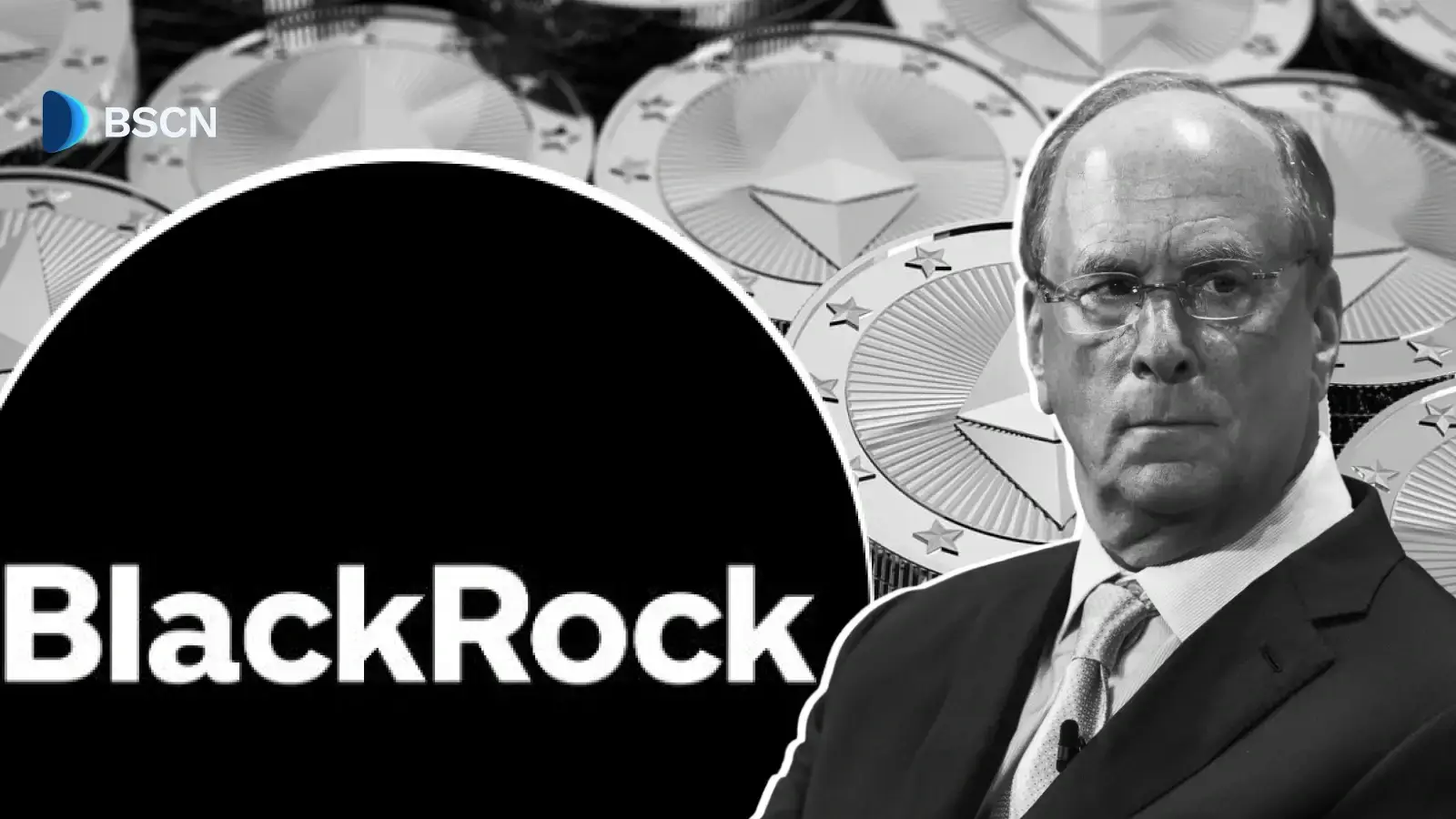
BlackRock, Coinbase to Keep 18% of Ethereum Staking Revenue from New ETF

BlackRock and Coinbase will take 18% of staking rewards from the new ETHB Ethereum ETF, leaving investors with 82%. Here's how the fee structure works.

Crypto Rich
February 18, 2026

(Advertisement)
Table of Contents
BlackRock and Coinbase will pocket 18% of all staking rewards generated by the upcoming iShares Staked Ethereum Trust ETF (ETHB), according to an amended S-1 filing submitted to the SEC on Feb. 17. Investors keep the remaining 82%. With Ethereum staking yields sitting around 2.8% annually, the real question is whether that cut is a fair trade for regulated access to ETH yield, or a Wall Street toll booth on blockchain rewards.
How Does the ETHB Fee Structure Work?
The 18% staking fee covers both BlackRock's share and Coinbase's cut as the prime execution agent. Coinbase also serves as custodian through Coinbase Custody Trust Company and manages the actual staking process through approved validators.
On top of that, ETHB carries a 0.25% annual sponsor fee on net asset value. BlackRock is waiving that down to 0.12% for the first $2.5 billion in assets during the initial 12 months, a common strategy to attract early capital.
To put the numbers in perspective: if ETHB held $2.5 billion and staking yielded roughly 3%, gross rewards would be about $75 million. After the 18% cut, shareholders would receive around $61.5 million, an effective yield of approximately 2.46% before the sponsor fee kicks in.
How Much ETH Will Be Staked?
Under normal conditions, BlackRock plans to stake between 70% and 95% of the fund's Ethereum holdings. The remaining 5% to 30% sits in what the filing calls a "Liquidity Sleeve," an unstaked buffer designed to cover daily creations, redemptions, and operational expenses.
This is where things get interesting for investors used to instant liquidity. Ethereum's staking activation queue can stretch up to 70 days, and daily activation limits cap entries at roughly 57,600 ETH. Full withdrawals take 7 to 10 days under normal conditions, but that timeline can stretch to weeks or even months during periods of network congestion. Redemptions happen in 40,000-share baskets, and if demand spikes, the Liquidity Sleeve could drain, forcing cash settlements or delays.
The filing itself acknowledges staking too much of the fund's ETH could cause shares to trade at significant premiums or discounts to the fund's actual underlying value.
Where Does ETHB Fit in the Market?
ETHB is not the first staked Ethereum ETF. Grayscale's ETHE and ETH products already incorporate staking yields, and VanEck has filed for its own staked version. But BlackRock's scale gives it a clear edge. Its existing spot Ethereum ETF (ETHA) has recently been reported at over $9 billion in assets, dwarfing Grayscale's ETHE at $2.3 billion.
BlackRock has already seeded the trust with $100,000, signaling readiness for launch pending SEC approval. If ETHB reached even half of ETHA's size, estimates suggest BlackRock could pull in $11 million to $20 million annually from the combined sponsor fee and staking revenue share.
The broader picture matters, too. Decisions on pending staking ETF amendments from Fidelity and Franklin Templeton are expected by late March 2026. If approved across the board, institutional capital flowing into Ethereum staking could lengthen the activation queue and compress yields over time, since rewards get split across a larger staked base.
What About Centralization Concerns?
Not everyone is celebrating. In the same week BlackRock detailed its staking plans, Ethereum co-founder Vitalik Buterin warned that heavy Wall Street concentration of ETH could distort blockchain governance and create centralized chokepoints.
Community reaction has been split. Some see the ETF as a "supply shock" for Ethereum that could trigger institutional FOMO. Others call the 18% fee steep, particularly when decentralized staking platforms often charge closer to 5%.
That tension sits at the heart of the crypto-TradFi debate: regulated access and institutional legitimacy on one side, higher fees and centralization risk on the other. ETHB won't resolve that argument, but it will put real numbers behind it once the SEC gives the green light.
Sources:
- DL News Reporting on ETHB fee structure, ETHA AUM, yield estimates, and Vitalik Buterin's centralization concerns.
- CryptoSlate Detailed breakdown of liquidity risks, activation queue dynamics, sponsor fee waivers, and revenue projections.
- Benzinga Financial breakdown of effective investor yield after the 18% staking fee.
Read Next...


Disclaimer
Disclaimer: The views expressed in this article do not necessarily represent the views of BSCN. The information provided in this article is for educational and entertainment purposes only and should not be construed as investment advice, or advice of any kind. BSCN assumes no responsibility for any investment decisions made based on the information provided in this article. If you believe that the article should be amended, please reach out to the BSCN team by emailing [email protected].
Author
 Crypto Rich
Rich has been researching cryptocurrency and blockchain technology for eight years and has served as a senior analyst at BSCN since its founding in 2020. He focuses on fundamental analysis of early-stage crypto projects and tokens and has published in-depth research reports on over 200 emerging protocols. Rich also writes about broader technology and scientific trends and maintains active involvement in the crypto community through X/Twitter Spaces, and leading industry events.
(Advertisement)
Latest News
2h : 35m ago

WLFI Price Rises as Mar-a-Lago Conference Begins
3h : 42m ago

CZ Still Has a Say in Major Binance Decisions, Co-CEO Richard Teng Confirms
4h : 44m ago
The World's First 'Prediction Market ETF' is Coming
6h : 24m ago

Bitcoin's Most Loyal Holders Are Finally Selling at a Loss — And That's a Red Flag
6h : 27m ago
Consensys Leads New Funding Round for MYX: V2 Fast-Approaching
7h : 12m ago

BlackRock, Coinbase to Keep 18% of Ethereum Staking Revenue from New ETF
8h : 18m ago

Strategy Buys Bitcoin's Dip as Saylor Declares "Crypto Winter"
11h : 9m ago
Franklin Templeton’s First Quarterly Report of XRP ETF (XRPZ): Performance and Key Highlights
(Advertisement)

Crypto Project & Token Reviews
Project & Token Reviews
Comprehensive reviews of crypto's most interesting projects and assets
Learn about the hottest projects & tokens

Latest Crypto News
Get up to date with the latest crypto news stories and events