News
(Advertisement)


Bitcoin's Most Loyal Holders Are Finally Selling at a Loss — And That's a Red Flag
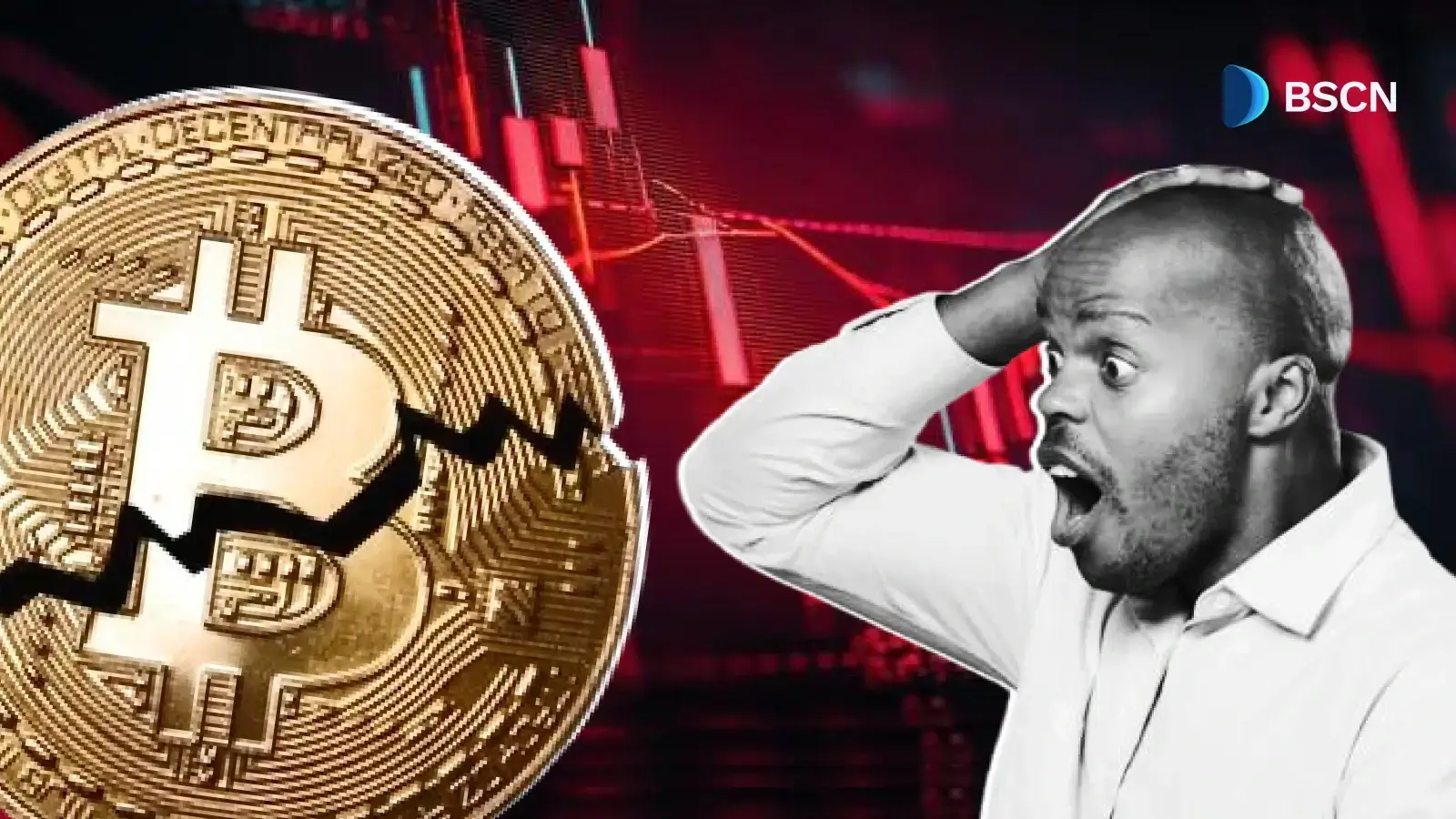
Bitcoin's long-term holders are realizing losses for the first time in months. Glassnode flags bear market signals as SOPR drops below 1 and $54K looms.

Soumen Datta
February 18, 2026

(Advertisement)
Table of Contents
What the Long-Term Holder SOPR Is Telling Us Right Now
Bitcoin's long-term holders are selling at a loss, and that is not something that happens often. On-chain analytics firm Glassnode flagged the development in a Telegram note this week, reporting that the 7-day exponential moving average of the Long-Term Holder Spent Output Profit Ratio (SOPR) has dropped below 1. That single data point carries significant weight, because when this cohort starts realizing losses, it typically signals stress deep enough to belong in a bear market, not a mid-cycle dip.
Long-term holders, defined broadly as wallets that have held Bitcoin for more than 155 days, are considered the market's most conviction-driven participants. They tend to accumulate during downturns and sell into strength. When they start selling at a loss, it suggests that pressure has reached a level that even patient investors cannot absorb.
What Is SOPR and Why Does It Matter?
SOPR, or Spent Output Profit Ratio, measures whether coins being moved on-chain are being sold above or below the price at which they were originally acquired. A reading above 1.0 means the average coin moved that day was sold at a profit. A reading below 1.0 means the opposite: holders are moving coins at a loss.
When SOPR drops below 1.0, it typically marks a capitulation zone, the point where sellers who have been holding out finally give up. Historically, SOPR recovering back above 1.0 after such a drop has signalled the end of a selling wave and the beginning of stabilization.
During the most recent sell-off, SOPR fell as low as 0.94, a level that indicates sellers had reached near-maximum selling pressure. The subsequent recovery back above 1.0 suggested that the immediate wave of panic selling from short-term holders had exhausted itself. The concern now is that long-term holders are starting a similar cycle of their own.
How Does February's Sell-Off Compare to Previous Crashes?
The February 6 dip to $62,800 has drawn direct comparisons to the May 2022 LUNA crash in terms of the pressure it placed on long-term holders. Glassnode described the current conditions as a "rare shift in conviction typically seen in deeper stages of bear markets," which is notable language given that Bitcoin had been trading well above cycle lows just weeks prior.
The parallel to LUNA is worth understanding. The May 2022 collapse of the Terra ecosystem wiped out tens of billions in market value within days and forced long-term holders into loss territory across the board. The fact that a routine sell-off in February 2026 is generating comparable stress metrics suggests the accumulation base beneath current prices is thinner than it appeared.
Key signals from the current data include:
- Long-Term Holder SOPR has dropped below 1.0, confirming losses are being realized
- Accumulation trends among long-term holders have weakened following the sell-off
- Stress levels are comparable to those recorded during the LUNA collapse in May 2022
- Glassnode identifies $54,000 as the next significant support level if current levels fail
What Do Macro Conditions Mean for Bitcoin's Next Move?
The broader economic backdrop is not making things easier for Bitcoin. The U.S. added 130,000 jobs in January, a figure strong enough to reduce expectations of a near-term Federal Reserve rate cut. Lower chances of rate cuts generally push risk assets lower, and Bitcoin has not been immune.
Inflation cooled to 2.4%, but the print failed to trigger any meaningful recovery rally in Bitcoin, which suggests the market is not positioned to respond positively to moderately good news right now. According to CME's FedWatch tool, markets are pricing in a 90% probability that the Federal Funds Rate stays unchanged in March.
For Bitcoin, this means the macro tailwind that helped drive prices higher in late 2024 and early 2025 is no longer a reliable catalyst in the short term.
Is $60,000 a Floor or a Stepping Stone Lower?
Not everyone is reading the current data as a precursor to deeper losses. Sean McNulty, APAC derivatives trading lead at FalconX, argues that $60,000 will hold as the cycle floor in the near term. His reasoning centers on what he describes as "healthy buying flows" and a "massive wall of buyers" near that level who absorbed the capitulation of short-term holders during the recent drop.
McNulty also points out that the sell-off lacked the kind of systemic collapse that defined previous cycle bottoms. The FTX blowup in November 2022, for example, caused cascading liquidations across the industry. The current drawdown, by comparison, has been driven by macro pressure and sentiment shifts rather than a structural failure in the market.
Worth noting, capitulation without a systemic event can produce sharper, faster recoveries because the underlying infrastructure remains intact.
If $60,000 fails to hold, analysts point to $54,000 as the next line of meaningful support, a level that would represent a roughly 15% decline from current prices and bring Bitcoin back to levels last seen in mid-2024.
Conclusion
Bitcoin's long-term holders are under measurable stress. The Long-Term Holder SOPR has dropped below 1.0, accumulation has weakened, and the pressure on this cohort is tracking at levels not seen since the LUNA collapse in May 2022. Glassnode puts the next meaningful support at $54,000 if current levels give way.
The counterargument is real though. The sell-off has not been driven by a systemic collapse, buying flows near $60,000 remain active, and SOPR recovering back above 1.0 suggests the worst of the short-term panic selling may already be over.
What happens next depends largely on whether macro conditions shift enough to bring buyers back in size. With rate cuts off the table for March and inflation data failing to spark a recovery rally, Bitcoin is navigating a difficult environment without the tailwinds that carried it higher in late 2024. The data does not guarantee a deeper correction, but it does suggest the market needs more than hope to find its next floor.
Resources
Report by Decrypt: Bitcoin’s Long-Term Holders Show Signs of Strain After February Sell-Off
Report by CNBC: U.S. had almost no job growth in 2025
Read Next...




February 17, 2026
Frequently Asked Questions
What does it mean when Bitcoin's Long-Term Holder SOPR drops below 1?
It means that long-term holders, those who have held Bitcoin for more than 155 days, are on average selling their coins below the price they originally paid. This is considered a bearish signal because this group typically sells into strength rather than weakness. A sustained drop below 1.0 in this metric has historically been associated with deeper bear market conditions.
What is the next support level for Bitcoin if current prices fail?
According to Glassnode, the next critical support level sits at $54,000. A significant buy wall near $60,000 may provide short-term stabilization, but if that level breaks, analysts point to $54,000 as the next meaningful floor based on on-chain data and historical price structure.
How does the current Bitcoin sell-off compare to the LUNA crash in May 2022?
Glassnode's data shows that the pressure placed on long-term holders during February's sell-off is comparable in intensity to what was seen during the LUNA collapse in May 2022. However, the current drawdown lacks the systemic blowup that defined that event, which some analysts argue makes a sharper recovery more likely this time around.
Disclaimer
Disclaimer: The views expressed in this article do not necessarily represent the views of BSCN. The information provided in this article is for educational and entertainment purposes only and should not be construed as investment advice, or advice of any kind. BSCN assumes no responsibility for any investment decisions made based on the information provided in this article. If you believe that the article should be amended, please reach out to the BSCN team by emailing [email protected].
Author
 Soumen Datta
Soumen has been a crypto researcher since 2020 and holds a master’s in Physics. His writing and research has been published by publications such as CryptoSlate and DailyCoin, as well as BSCN. His areas of focus include Bitcoin, DeFi, and high-potential altcoins like Ethereum, Solana, XRP, and Chainlink. He combines analytical depth with journalistic clarity to deliver insights for both newcomers and seasoned crypto readers.
(Advertisement)
Latest News
2h : 34m ago

WLFI Price Rises as Mar-a-Lago Conference Begins
3h : 41m ago

CZ Still Has a Say in Major Binance Decisions, Co-CEO Richard Teng Confirms
4h : 43m ago
The World's First 'Prediction Market ETF' is Coming
6h : 23m ago
Bitcoin's Most Loyal Holders Are Finally Selling at a Loss — And That's a Red Flag
6h : 26m ago
Consensys Leads New Funding Round for MYX: V2 Fast-Approaching
7h : 11m ago

BlackRock, Coinbase to Keep 18% of Ethereum Staking Revenue from New ETF
8h : 17m ago

Strategy Buys Bitcoin's Dip as Saylor Declares "Crypto Winter"
11h : 8m ago
Franklin Templeton’s First Quarterly Report of XRP ETF (XRPZ): Performance and Key Highlights
(Advertisement)

Crypto Project & Token Reviews
Project & Token Reviews
Comprehensive reviews of crypto's most interesting projects and assets
Learn about the hottest projects & tokens

Latest Crypto News
Get up to date with the latest crypto news stories and events