News
(Advertisement)


Why XRP Is the Only Major Crypto With Rising Sentiment Right Now
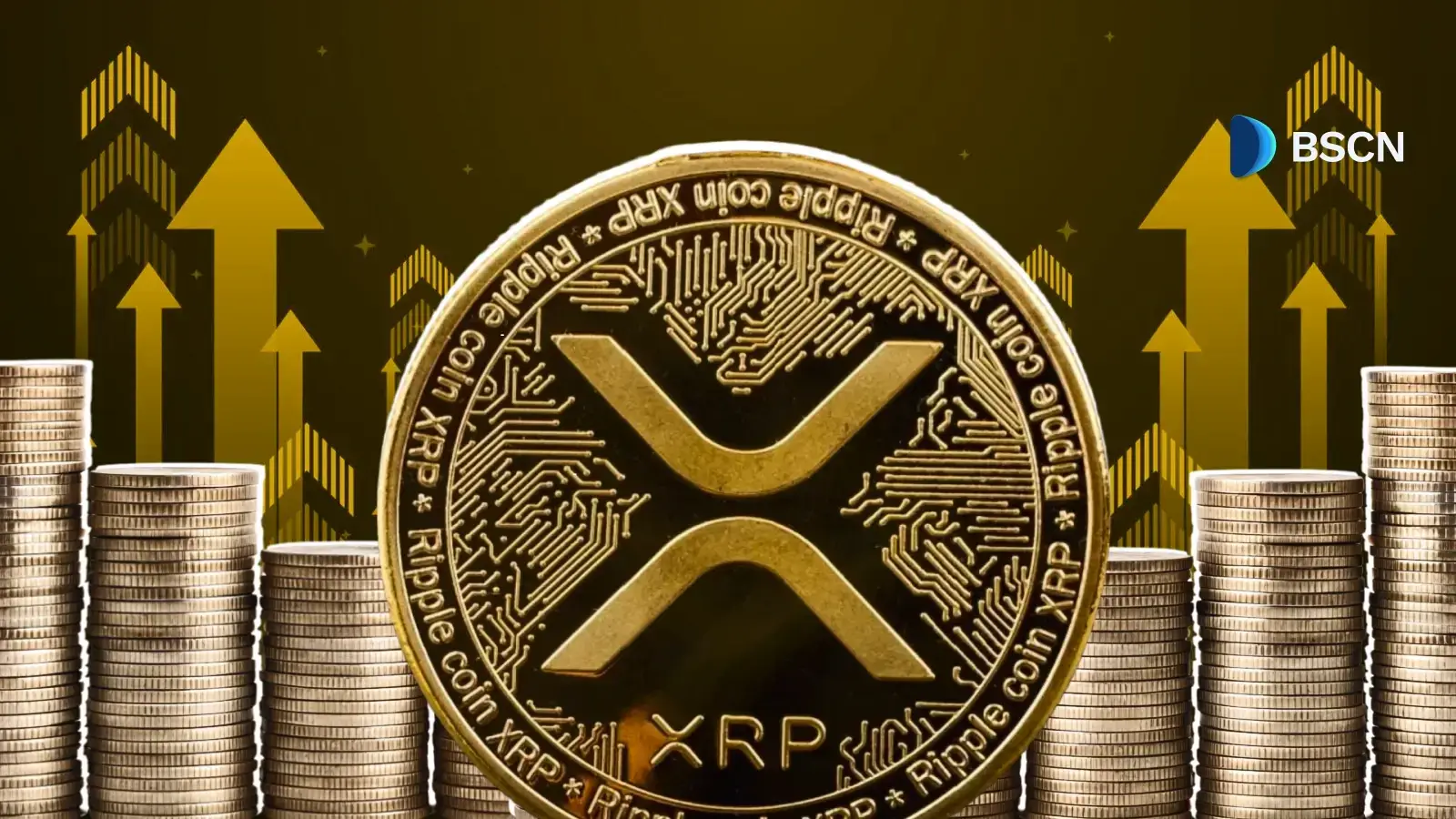
XRP sentiment hits a 5-week high as Bitcoin and Ethereum face outflows. Here's what's driving the shift, from Coinbase collateral to XRPL infrastructure upgrades.

Soumen Datta
February 20, 2026

(Advertisement)
Table of Contents
XRP is posting its highest level of bullish social sentiment in five weeks, even as Bitcoin and Ethereum continue to attract negative attention from traders and investors. According to data from Santiment, positive chatter around XRP is climbing while the two largest crypto assets by market cap see fading enthusiasm across social media and trading forums.
📊 Crypto markets have struggled to maintain momentum, and social data indicates there are far less bullish comments toward Bitcoin and Ethereum compared to last week. Meanwhile, XRP is at a 5-week high in bullishness, likely due to recent partnership expansion announcements. pic.twitter.com/TYyqY5bjb0
— Santiment (@santimentfeed) February 18, 2026
The divergence is backed by real capital flows, with XRP pulling in roughly $150 million in fresh institutional investment this year, according to a CoinShares report.
What Is Driving XRP's Sentiment Surge?
The mood shift around XRP is not happening in a vacuum. Several concrete developments are feeding into it, from new lending utility to infrastructure upgrades on the XRP Ledger (XRPL) and an expanding institutional product stack from Ripple.
CoinShares data shows that digital asset investment products saw a fourth consecutive week of outflows totalling $173 million, bringing the cumulative four-week total to $3.74 billion. Bitcoin led the losses with $133 million in outflows. Ethereum followed with $85.1 million in outflows. XRP, by contrast, recorded $33.4 million in inflows during the same period, alongside Solana at $31 million and Chainlink at $1.1 million.
The Broader Market Context
The wider crypto market is in a cautious, risk-off phase. U.S.-based investors accounted for $403 million in outflows, while the rest of the world recorded $230 million in inflows, with Germany leading at $115 million, Canada at $46.3 million, and Switzerland at $36.8 million. ETP trading volumes dropped sharply to $27 billion, down from a record $63 billion the prior week.
Short Bitcoin products also recorded $15.4 million in outflows over the past two weeks, a pattern that has historically appeared near market lows.
Why Are Bitcoin and Ethereum Losing Momentum?
Both assets are stuck in tight consolidation ranges. Bullish commentary has dropped noticeably from the prior week across social platforms and crypto communities, which are typically early signals of shifting retail sentiment. Without a clear catalyst such as macroeconomic clarity, fresh ETF inflows, or a confirmed technical breakout, speculative liquidity tends to thin out and cautious positioning takes over.
The current mood is less fearful and more fatigued. Traders are not panicking, but they are not accumulating aggressively either.
XRP is carving out higher lows in this environment, which is a technical chart pattern indicating that buyers are stepping in at progressively higher price levels during pullbacks. That kind of structure suggests demand is rebuilding rather than fading.
Coinbase Adds XRP as Loan Collateral
One of the clearest near-term catalysts for XRP came on February 18, when Coinbase, the largest U.S.-based crypto exchange, added XRP as eligible collateral for USDC loans of up to $100,000. DOGE, ADA, and LTC were also added in the same update.
The distinction between payment utility and collateral utility is worth unpacking here. In payment flows, tokens move quickly and holders do not necessarily need to hold large balances for long. As collateral, the dynamic changes.
When investors can borrow against their XRP rather than selling it to access liquidity, some of that supply gets locked in place. Borrowers who want to keep loans open are incentivized to maintain or even increase their collateral during volatile periods to avoid liquidation. That can create what market participants call stickier demand, where sell pressure is reduced because holders have a financial reason to keep their position open.
The mechanism cuts both ways, though. If prices fall sharply and collateral values drop quickly, forced liquidations can amplify downside moves.
What Is the XRPL Building for Institutions?
Beyond the Coinbase news, the XRP Ledger has been shipping infrastructure aimed at regulated market participants. Recent additions include Permissioned Domains and a credential-gated decentralized exchange (DEX), alongside tools like token escrow.
Permissioned Domains allow institutions to transact on-chain within defined compliance and access boundaries. A credential-gated DEX restricts participation to verified counterparties, which mirrors how traditional financial markets already segment access by venue, product type, and participant category.
This is a notably different approach from the open-access model associated with Ethereum-based DeFi. For a bank or asset manager that needs to map blockchain settlement to internal compliance controls and counterparty policies, a permissioned environment is a lower barrier to adoption.
The features are live, but the real test is uptake. Meaningful adoption would show up in measurable ways:
- Permissioned domains being launched at scale
- Sustained credential activity across the gated DEX
- Order-book liquidity that holds beyond pilot phases
- Market makers choosing to keep inventory on the ledger
If those metrics materialize, they strengthen the case for XRP as institutional market infrastructure, not just a payment token.
How Far Has Ripple's Institutional Stack Come?
Ripple has expanded well beyond its original cross-border payment product over the past year. Its current lineup includes Ripple Payments for settlement, Ripple Custody for asset safekeeping, and Ripple Prime, an institutional brokerage offering. The company is also active in treasury operations through a partnership with GTreasury.
Running through all of these products is RLUSD, Ripple's dollar-backed stablecoin, which is being positioned as both a settlement asset and collateral instrument across the ecosystem. Grayscale Investments has also noted that XRP is now the second most discussed crypto asset after Bitcoin, a sign of rising visibility among both retail and institutional audiences.
Ripple was also highlighted as a calibration tool in the Federal Reserve's latest crypto risk proposal, adding a layer of regulatory relevance that few other crypto firms can point to right now.
Conclusion
Social sentiment is one signal among many. A spike in bullish chatter can precede a price rally, but it can also reflect crowded positioning if expectations move faster than fundamentals. The current XRP sentiment reading is not euphoric, it is constructive, and it is backed by flow data, new utility, and infrastructure development rather than hype cycles alone.
The combination of Coinbase collateral support, XRPL's permissioned trading infrastructure, Ripple's growing institutional product suite, and $150 million in year-to-date inflows gives XRP a more concrete set of drivers than most assets currently riding sentiment waves.
Resources
Report by CoinShares: Volume 273: Digital Asset Fund Flows Weekly Report
Santiment on X: Post on Feb. 19
Report by CryptoSlate: XRP sentiment hits a 5-week high as money rotates away from Bitcoin and Ethereum
Report by CoinDesk: XRP Ledger rolls out members-only DEX for regulated institutions
XRPL resources: About permissionless DEX
Coinbase on X: Post on Feb. 18
Report by Decrypt: Coinbase’s Crypto-Backed Lending Product Expands to XRP and DOGE




Frequently Asked Questions
Why is XRP sentiment at a 5-week high?
XRP sentiment hit a 5-week high due to a combination of rising institutional inflows, Coinbase adding XRP as loan collateral, and new infrastructure upgrades on the XRP Ledger designed for regulated institutions. Santiment data shows bullish social activity around XRP climbing while Bitcoin and Ethereum face declining enthusiasm.
How much has XRP attracted in institutional investment in 2025?
According to CoinShares, XRP has attracted approximately $150 million in fresh capital so far this year, making it the best-performing crypto token by inflows during a period when Bitcoin and Ethereum have combined for around $1.5 billion in cumulative outflows.
What is a credential-gated DEX on the XRP Ledger?
A credential-gated DEX is a decentralized exchange that restricts participation to verified users who meet specific compliance or identity requirements. Unlike open DeFi protocols where anyone can trade, a gated DEX allows institutions to transact on-chain within defined access boundaries, making it easier to align blockchain activity with internal compliance policies and counterparty rules.
Disclaimer
Disclaimer: The views expressed in this article do not necessarily represent the views of BSCN. The information provided in this article is for educational and entertainment purposes only and should not be construed as investment advice, or advice of any kind. BSCN assumes no responsibility for any investment decisions made based on the information provided in this article. If you believe that the article should be amended, please reach out to the BSCN team by emailing [email protected].
Author
 Soumen Datta
Soumen has been a crypto researcher since 2020 and holds a master’s in Physics. His writing and research has been published by publications such as CryptoSlate and DailyCoin, as well as BSCN. His areas of focus include Bitcoin, DeFi, and high-potential altcoins like Ethereum, Solana, XRP, and Chainlink. He combines analytical depth with journalistic clarity to deliver insights for both newcomers and seasoned crypto readers.
(Advertisement)
Latest News
2h : 59m ago
Can $ASTER Become Crypto's Top Perp DEX?
4h : 39m ago
Canton Development Fund Goes Live: What It Is and How It Works
6h : 10m ago

OnRe Finance Hits $100M AUM Four Months Early
7h : 3m ago
Institutions Go Bullish on Ripple's $XRP: ETF Inflows Surge in 2026
7h : 16m ago

Kaspa Hits New Milestone With Over 600 Million Total Transactions Recorded on the Blockchain
8h : 9m ago

What Is Vitalik Buterin's Net Worth?
9h : 19m ago
Chainlink Reserve Update: Total Holdings, Accumulation History, and Current Status
10h : 22m ago
Why XRP Is the Only Major Crypto With Rising Sentiment Right Now
(Advertisement)

Crypto Project & Token Reviews
Project & Token Reviews
Comprehensive reviews of crypto's most interesting projects and assets
Learn about the hottest projects & tokens

Latest Crypto News
Get up to date with the latest crypto news stories and events